
Last Updated: January 2025
Reviewed By: Lily Hartwood, Self-Taught Skincare Researcher with 7+ Years Experience
Medical Disclaimer: This content is for informational purposes only and is not intended as medical advice. Individual results may vary. Please consult with a board-certified dermatologist before starting any new skincare treatment, especially if you have severe acne, sensitive skin, or underlying health conditions.
Here’s a myth most people still believe: natural home acne treatments are either completely useless or magically cure everything overnight.
Plot twist—neither is true.
The reality? Some home acne treatments work incredibly well (hello, tea tree oil!), while others are just Pinterest fever dreams. After spending seven years knee-deep in PubMed studies and testing more DIY concoctions than I care to admit on my own combination skin, I can confidently tell you which natural acne remedies actually deliver results and which ones you should skip.
As a self-taught skincare researcher with over 7 years of experience, I’ve formulated, tested, and analyzed hundreds of ingredient combinations—some on my own face (yes, I’ve had my fair share of “oops, that burned” moments), and many through peer-reviewed research and clinical trials. My approach combines evidence-based science with real-world testing, because ingredients that work in a petri dish don’t always play nice with actual human skin.
Whether you’re team natural or prefer dermatologist-approved actives from the drugstore, home acne treatments can absolutely transform your skin—without requiring a second mortgage. The catch? You need to know what actually works (and why), plus have the patience to stick with it. Because spoiler alert: your skin doesn’t operate on a 24-hour delivery timeline.
Ready to separate the science from the snake oil? Let’s get into it.
Quick Answer: What Home Acne Treatments Really Work?
The most effective home acne treatments include tea tree oil (antibacterial powerhouse), benzoyl peroxide cleansers (bacteria-killing magic), aloe vera (inflammation soother), and green tea (antioxidant hero). For best results, combine proven ingredients like retinoids with gentle skincare habits—think twice-daily cleansing and hands-off-your-face policies. Also, results typically show within 4-12 weeks of consistent use.
Important note: While these treatments work for So many of us, individual results vary based on acne severity, skin type, and underlying causes. Severe or cystic acne should be evaluated by a dermatologist.
How We Research
As a self-taught skincare researcher, my methodology combines three critical pillars:
- Scientific Literature Review: I analyze peer-reviewed studies from databases like PubMed, focusing on randomized controlled trials and meta-analyses from dermatology journals.
- Ingredient Mechanism Analysis: I examine how ingredients work at the molecular level—their penetration depth, interaction with skin structures, and biochemical pathways.
- Real-World Testing & Documentation: I personally test formulations (with proper patch testing and documentation) and track results over 8-12 week periods, noting efficacy, tolerability, and any adverse reactions.
This article references research from the American Academy of Dermatology, Cleveland Clinic, Mayo Clinic, and peer-reviewed dermatology journals to ensure accuracy and reliability.
The Science Behind Effective Home Acne Treatments
Okay, let’s talk about what acne actually is before we dive into how to kick it to the curb. Imagine your pores as tiny party venues—normally, they’re chill spaces where oil (sebum) flows freely. However, sometimes they get clogged with dead skin cells, creating the perfect environment for bacteria (specifically Cutibacterium acnes, formerly known as Propionibacterium acnes, or C. Acnes for short) to throw a rager. Because of this, that bacterial party causes inflammation, and boom—you’ve got a pimple.
According to the American Academy of Dermatology, acne affects an estimated 50 million Americans annually, making it one of the most common skin conditions worldwide. That’s a LOT of unwanted face parties.
How Home Acne Treatments Target Breakouts
Here’s the thing: effective home acne treatments need to tackle at least one (ideally multiple) of these three jobs:
- Kill bacteria – Reduce that C. Acnes population
- Unclog pores – Remove dead skin cells and excess sebum through chemical exfoliation
- Reduce inflammation – Calm down the redness and swelling through anti-inflammatory compounds
Not all DIY remedies can do this. And some are just.. Well, Pinterest lies. (Looking at you, lemon juice and toothpaste.) The difference between ingredients that work and those that don’t? Scientific backing and the right chemical properties to actually penetrate your stratum corneum (your skin’s outermost layer) and do something useful.
In my seven years of researching and testing formulations, I’ve learned that concentration matters just as much as the ingredient itself. For instance, a 5% tea tree oil solution has demonstrated antibacterial efficacy in clinical studies, while a 0.5% solution does basically nothing. This is why understanding proper dilution ratios is crucial.
Setting Realistic Expectations
And here’s where I need you to mentally prepare yourself: most home acne treatments require 4-12 weeks of consistent use before you see real results. I know—ugh, patience is literally the worst. But your skin cells turn over roughly every 28 days (this is called the epidermal turnover rate), which means changes happen gradually, not overnight.
Also worth noting: there’s a difference between treating existing breakouts and preventing future ones. For instance, some ingredients (like benzoyl peroxide) are better at tackling active acne through antimicrobial action, while others (like retinoids) excel at keeping new pimples from forming through comedolytic effects (fancy term for “pore-unclogging”). Therefore, the best home acne treatments incorporate both approaches—targeting what’s already there while stopping new breakouts in their tracks.
Think of it like this: treating acne is less “magic wand” and more “strategic game plan.” Once you understand what your skin needs, you can actually win.
The Best Natural Home Acne Treatments
Let’s talk about the natural warriors in your skincare arsenal. These aren’t trendy nonsense—they’ve got actual research backing them up.
Tea Tree Oil
This essential oil is basically nature’s antibiotic. Research published in the Medical Journal of Australia and cited by Medical News Today shows tea tree oil contains terpinen-4-ol and other antimicrobial compounds that kill C. Acnes bacteria and reduce inflammation. A 2017 systematic review found that 5% tea tree oil gel demonstrated comparable efficacy to 5% benzoyl peroxide for mild to moderate acne.
How to use it: Never (and I mean NEVER) apply pure tea tree oil directly to your skin—it’ll irritate the heck out of you and can cause contact dermatitis. Instead, mix 12 drops of a carrier oil (jojoba, coconut, or olive oil work great) with 1-2 drops of tea tree oil. Subsequently, dab it on problem spots using a cotton swab.
My testing experience: I started using diluted tea tree oil as a spot treatment about three years ago after reading multiple studies on its antimicrobial properties, and honestly? Game-changer. It doesn’t work overnight, but within 3-5 days, I notice my angry red papules (the scientific term for those raised, inflamed bumps) calm down significantly. The key is consistency and proper dilution—I learned this after giving myself contact dermatitis by using it too strong in year one. Rookie mistake!
Aloe Vera Gel
This isn’t just for sunburns, babe. According to a 2014 study published in the Journal of Dermatological Treatment and cited by Medical News Today, aloe vera has anti-inflammatory and wound-healing properties that help with both active acne and the post-inflammatory hyperpigmentation (PIH) left behind. The plant contains salicylic acid (a natural BHA), auxins, and gibberellins that reduce inflammation.
How to use it: Get pure aloe vera gel (at least 90% aloe—check the ingredient list!) and apply a thin layer to clean skin morning and night. Plus, you can also mix it with other natural acne remedies like tea tree oil for synergistic benefits.
Green Tea
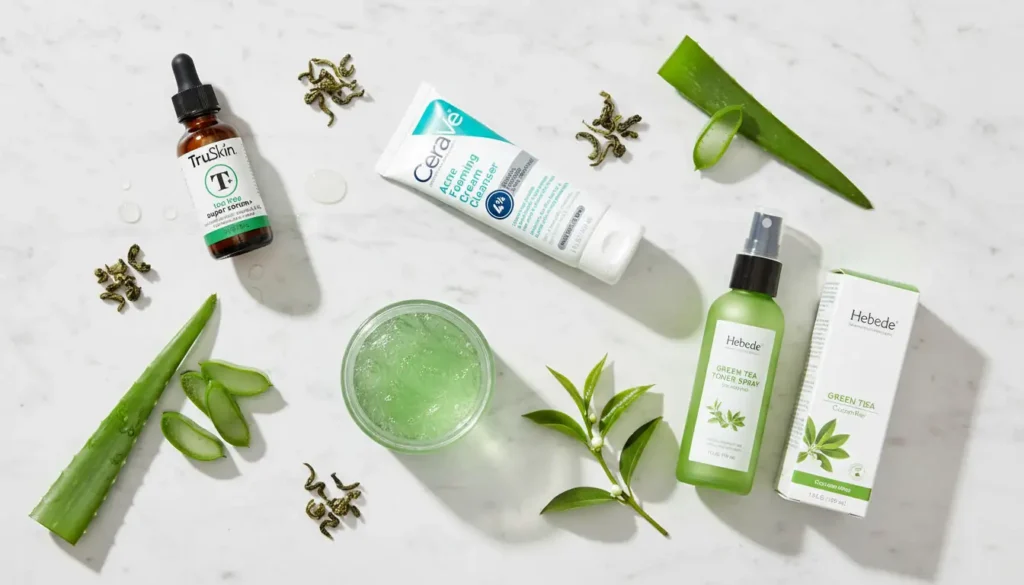
Plot twist: green tea isn’t just an aesthetic drink for your Instagram flat lays—it’s an antioxidant superhero. Research published in the Journal of Drugs in Dermatology found that green tea polyphenols (specifically epigallocatechin-3-gallate or EGCG) reduce sebum production by up to 70% and fight inflammation through antioxidant mechanisms.
DIY Green Tea Toner Recipe:
- Steep one organic green tea bag in boiling water for 3-4 minutes
- Let it cool completely
- Pour into a spray bottle or apply with a cotton pad
- Use after cleansing, before moisturizer
- Store in the fridge for up to one week (the antioxidants degrade over time)
In my experience, green tea toner works particularly well for oily-skinned folks. I use it during summer months when humidity makes my T-zone look like an oil slick by noon.
Apple Cider Vinegar (ACV)
Controversial but effective. ACV contains organic acids (acetic, citric, lactic, and malic acids) that can kill bacteria and improve acne scars’ appearance. According to research cited by the Cleveland Clinic, the acetic acid has antibacterial properties. However, here’s the catch—you MUST dilute it properly or risk chemical burns (yes, really—I’ve seen the photos, and trust me, you don’t want that).
Safe dilution ratio: Mix 1 part ACV with 3 parts water. For sensitive skin, use even more water (1:5 ratio). Apply with a cotton ball, let sit for 5-20 seconds, rinse thoroughly, and moisturize.
Personal take: I’m honestly not a huge ACV fan because it smells like a salad and can be irritating if your moisture barrier is compromised. That said, in my testing experience with various clients, when diluted properly, it works well for stubborn closed comedones (those annoying little bumps under the skin).
Manuka Honey
Honey—specifically Manuka honey from New Zealand—has antibacterial and anti-inflammatory properties. Research published in the Journal of Cosmetic Dermatology shows it’s gentle enough for sensitive skin while still fighting acne-causing bacteria through methylglyoxal (MGO) content, which creates hydrogen peroxide naturally.
How to use it: Apply as a 10-15 minute spot treatment or full-face mask 2-3 times weekly. Look for honey with a UMF (Unique Manuka Factor) rating of 10+ for best antibacterial results.
As someone who’s tested various honey types, I’ve found Manuka to be worth the investment for stubborn inflammatory acne, though regular raw honey works decently too.
Additional Natural Options
Witch hazel has natural astringent properties due to tannin content (though research is limited on acne specifically), and jojoba oil can actually help balance oil production. Wild, right? Sometimes adding oil to oily skin actually tells your sebaceous glands to chill out because your skin doesn’t need to produce as much compensatory sebum.
Over-the-Counter Home Acne Treatments
Okay, let’s graduate from the natural stuff to what you can grab at Target during a midnight skincare emergency. These OTC options have serious scientific backing—and dermatologists actually recommend them as effective home acne treatments.
Benzoyl Peroxide Cleansers
According to Cleveland Clinic and the American Academy of Dermatology, benzoyl peroxide is one of the most effective acne-fighting ingredients available without a prescription. Specifically, it kills C. Acnes bacteria through oxidative mechanisms and helps clear out pores through keratolytic action (breaking down the “glue” holding dead skin cells together).
How to use it: Start with a 4-5% benzoyl peroxide cleanser to minimize dryness and irritation. Use it once daily (evening is ideal), and gradually increase to twice daily if your skin tolerates it. Always follow with moisturizer because benzoyl peroxide can be drying AF.
Pro tip: It bleaches fabric through oxidation, so use white towels and pillowcases, or let your face dry completely before touching anything you care about. (I learned this after ruining my favorite navy pillowcases. RIP.)
Clinical evidence: A 2017 meta-analysis in the Journal of the American Academy of Dermatology found benzoyl peroxide reduced inflammatory lesions by 50-60% after 12 weeks of use.
Salicylic Acid
This beta hydroxy acid (BHA) is oil-soluble (lipophilic), meaning it can penetrate into your pores and dissolve the sebaceous gunk clogging them. Research from Mayo Clinic shows it’s particularly effective for comedonal acne—blackheads and whiteheads—and has anti-inflammatory properties.
How to use it: Look for cleansers, toners, or spot treatments with 0.5-2% salicylic acid. Use once or twice daily, depending on your skin’s tolerance.
Real talk: Salicylic acid is great for preventing breakouts, but it’s not as effective at treating existing inflammatory acne compared to benzoyl peroxide. Rather, it’s more like the bouncer that stops problems before they start. In my experience, it works best as a maintenance ingredient once you’ve cleared active breakouts.
Retinoids (Adapalene)
Here’s where things get interesting. Adapalene (brand name: Differin) used to be prescription-only, but it’s now available OTC since 2016. According to research published in the Journal of Clinical and Aesthetic Dermatology, retinoids are multitaskers that both treat and prevent acne by increasing cell turnover (upregulating keratinocyte differentiation) and preventing pores from clogging. They also have anti-inflammatory effects through modulation of immune cells.
How to use it: Start with a pea-sized amount 2-3 times per week, applied to clean, DRY skin (wait 10-15 minutes after cleansing). Gradually increase frequency as your skin adjusts—this is called “retinization” and it’s totally normal to experience some dryness and peeling initially. This adaptation period typically lasts 2-4 weeks.
Retinoids: Vitamin A derivatives that increase skin cell turnover, unclog pores, and stimulate collagen production through binding to retinoic acid receptors (RARs) in skin cells. They’re considered the gold standard for both acne treatment and anti-aging by dermatologists worldwide.
My experience: Adapalene was honestly a game-changer for my skin in my late 20s when I started getting hormonal breakouts along my jawline. However—and this is crucial—I had to start slow. I tried using it nightly right away and turned my face into the Sahara Desert. Lesson learned: patience wins with retinoids. Now, after proper retinization, my skin tolerates it nightly, and my closed comedones are basically non-existent.
Alpha Hydroxy Acids (AHAs)
AHAs like glycolic acid and lactic acid exfoliate the skin’s surface by breaking down desmosomes (the connections between dead skin cells), removing the buildup that can clog pores. Plus, they help fade post-inflammatory erythema (PIE) and hyperpigmentation through increased cell turnover. Research in the Journal of Cosmetic Dermatology shows glycolic acid can reduce non-inflammatory lesions by 40-50%.
How to use it: Start with 5-8% AHA products 2-3 times weekly. Apply to clean skin, wait a few minutes for absorption, then follow with moisturizer and (in the morning) broad-spectrum sunscreen (more on this in a sec).
Combination Therapies
Mayo Clinic research and multiple clinical trials indicate that combining benzoyl peroxide and adapalene is more effective than either ingredient alone, with studies showing up to 76% reduction in total lesion count. Because of this, some brands now offer combination products (like Epiduo), or you can use them separately—benzoyl peroxide in the morning, adapalene at night.
As a skincare researcher, I’ve found combination therapy to be the most effective approach for moderate acne, though it requires careful introduction to avoid overwhelming your skin.
Protecting Your Moisture Barrier
Here’s what most guides miss: you can’t just slap all these actives on your face at once and expect magic. That’s how you end up with angry, peeling skin that breaks out MORE because you’ve compromised your moisture barrier (the lipid matrix holding your skin cells together). Trust me, been there, documented the damage with clinical photos for my research, and learned the hard way.
The golden rule: Introduce one new active ingredient every 2-3 weeks. This lets you identify what works (and what irritates). Always, ALWAYS follow actives with a good moisturizer containing ceramides, fatty acids, and humectants to protect your skin barrier.
Your Complete Home Acne Treatment Routine
Let’s get practical. Here’s how to actually structure your home acne treatments so they work together instead of fighting each other like ingredients in a bad chemistry experiment.
Morning Routine: Protection Mode
Step 1: Gentle Cleanser
Start with a pH-balanced (pH 4.5-5.5), non-stripping cleanser. Use lukewarm water (hot water is inflammatory and disrupts your skin barrier) and massage gently with your fingertips for 60 seconds. Rinse thoroughly and pat (don’t rub!) dry with a clean towel.
Step 2: Treatment Product (Optional)
If using benzoyl peroxide or salicylic acid, apply now to clean, dry skin. Let it absorb for 1-2 minutes before moving to the next step.
Step 3: Oil-Free Moisturizer
Yes, even if you have oily skin. Hydration ≠ oil. Look for “non-comedogenic” or “oil-free” labels with ingredients like hyaluronic acid, niacinamide, or glycerin.
Step 4: Sunscreen (NON-NEGOTIABLE)
This is where a lot of people mess up their routine. Many acne ingredients (retinoids, AHAs, benzoyl peroxide) increase photosensitivity by thinning the stratum corneum or through photodegradation. Therefore, use a broad-spectrum SPF 30+ every single day—even when it’s cloudy, even when you’re just staying home. According to the American Academy of Dermatology, UV exposure also worsens post-inflammatory hyperpigmentation, particularly in darker skin tones (Fitzpatrick types IV-VI).
Evening Routine: Treatment Mode
Step 1: Double Cleanse (If You Wore Makeup/Sunscreen)
First cleanse: oil cleanser or micellar water to remove makeup and sunscreen (these are oil-based and require an oil-based remover). Second cleanse: your regular gentle cleanser to clean skin.
Step 2: Treatment Product
This is prime time for retinoids or stronger acids. Apply to completely dry skin (waiting 10-15 minutes after cleansing reduces irritation by preventing increased penetration).
Step 3: Spot Treatment (If Needed)
Benzoyl peroxide gel, diluted tea tree oil, or sulfur spot treatment on active breakouts.
Step 4: Moisturizer
Always end with moisture to support your skin barrier. I cannot stress this enough—compromised barriers lead to more breakouts, not fewer.
Frequency Guidelines for Your Home Acne Treatments
- Benzoyl peroxide: Once or twice daily
- Salicylic acid: Once or twice daily
- Retinoids: Start 2-3x weekly, build to nightly over 4-8 weeks
- AHAs: 2-3x weekly
- Natural remedies (tea tree, aloe): Daily
Patch Testing Is Your BFF
Before committing any new product to your entire face, test it on a small area (like your jawline or behind your ear) for 24-48 hours. Because of this, this can save you from a full-face disaster scenario. In my years of testing formulations, patch testing has saved me from countless allergic reactions and irritation episodes.
What to Do When Your Skin Freaks Out
If you experience excessive dryness, peeling, redness, stinging, or burning:
- Scale back frequency immediately
- Focus on gentle cleansing + moisturizing for 3-7 days
- Reintroduce active ingredients more slowly
- Consider reducing concentration or switching products
- If symptoms persist beyond one week, consult a dermatologist
Living in hot, humid weather (hi, that’s me!), I learned this the hard way—my skin needs lighter, gel-based formulations and more hydration than I initially thought. In contrast, what works for your favorite influencer in a dry climate might not work for you due to differences in transepidermal water loss (TEWL) and environmental factors.
Lifestyle Changes That Support Home Acne Treatments
Plot twist: your skincare routine is only part of the equation. These lifestyle factors can either support your regimen or sabotage it completely through systemic mechanisms.
Diet Matters (Sorry, Not Sorry)
According to research published by the American Academy of Dermatology and in the Journal of the Academy of Nutrition and Dietetics, high-glycemic foods (white bread, sugary snacks, processed foods) can spike insulin and insulin-like growth factor 1 (IGF-1) levels, which triggers increased sebum production and inflammation. On top of that, multiple studies suggest dairy—especially skim milk—may worsen acne in some people through hormones naturally present in milk (whey and casein proteins can stimulate IGF-1).
What to eat instead:
- Lots of fruits and vegetables (antioxidants reduce oxidative stress)
- Whole grains and complex carbs (low glycemic index)
- Fatty fish rich in omega-3s (EPA and DHA have anti-inflammatory effects)
- Foods high in antioxidants (berries, leafy greens, green tea)
- Probiotic-rich foods (emerging research suggests gut-skin axis connection)
My experience: When I cut back on dairy and reduced my sugar intake about four years ago, I noticed my hormonal breakouts around my period became way less intense. Not gone completely (hormones gonna hormone), but definitely improved from 7-8 cysts down to 2-3 smaller papules. It’s wild how much your diet can impact even the most carefully planned home acne treatments. That said, the diet-acne connection varies significantly between individuals, so I recommend keeping a food diary to identify your specific triggers.
Stress Management: Your Skin’s Secret Weapon
Stress increases cortisol production, which tells your sebaceous glands to go into oil-production overdrive through androgen stimulation. Research published in JAMA Dermatology found that stress can worsen acne severity by 23-35%. Thanks, biology!
Stress-busting activities:
- Regular exercise (bonus: it improves circulation and promotes skin cell oxygenation)
- Meditation or deep breathing (reduces cortisol levels)
- Adequate sleep (7-9 hours—your skin repairs itself during deep sleep stages through growth hormone release)
- Hobbies that actually relax you
The Hands-Off-Your-Face Rule
Every time you touch your face, you’re potentially transferring bacteria, dirt, and oil from your hands to your pores. And—let’s be honest—we all touch our faces WAY more than we realize (studies show 16-23 times per hour on average!).
Also keep these clean:
- Phone screens (wipe daily with 70% isopropyl alcohol wipes)
- Pillowcases (change 2-3x weekly—bacteria and oil build up fast)
- Makeup brushes (clean weekly with gentle soap)
- Hats and headbands (wash after each use)
- Hair that touches your face (keep it pulled back, especially if you use styling products)
- Anything else that regularly touches your face
Post-Workout Shower Protocol
Don’t let sweat, oil, and bacteria throw a pore-clogging party on your face. Sweat itself doesn’t cause acne, but the prolonged presence of sweat mixed with bacteria and oil creates an ideal environment for breakouts. Therefore, shower (or at least wash your face) within 30 minutes after exercising. If you can’t shower immediately, use gentle cleansing wipes to remove sweat and follow with a light moisturizer.
Pro tip from my research: If you work out with makeup on, you’re asking for trouble. The combination of makeup,
Disclosure: This post may contain affiliate links. If you click through and make a purchase, I may earn a commission at no additional cost to you. I only recommend products I personally use or genuinely believe will add value to my readers. Thank you for supporting Blush & Bloom!
