
Last reviewed by Lily Hartwood, Self-Taught Ingredient Researcher | February 2026
I remember the exact moment I spotted my first fine line. I was 27, doing my makeup in my car — the lighting was perfect — and there it was: a tiny crease near my eye that didn’t bounce back when I smiled. I sat there for five minutes making faces in the mirror. That little line sent me spiraling into a research rabbit hole that lasted weeks, and honestly, it completely changed how I approach skincare.
Whether you’re starting to notice those first lines or just want to keep your skin looking fresh for years to come, this guide breaks down what you need to know: how skin aging works at a cellular level, which ingredients are actually backed by research, and when to start a preventative routine. No miracle promises — just the science, explained like we’re sharing secrets over iced lattes.
A note on my background: I’m a self-taught ingredient researcher with over a decade of obsessive study — not a dermatologist. I’ve read extensively from peer-reviewed journals, personally tested over 300 products, and regularly run my findings by dermatologists and cosmetic chemists to fact-check my conclusions. I’ll be clear throughout this guide about what’s established science versus my personal experience, and I always recommend consulting a board-certified dermatologist for anything specific to your skin.
Medical Disclaimer: This content is for educational purposes only and should not replace professional medical advice. Always consult with a board-certified dermatologist for personalized skincare recommendations, especially if you have specific skin conditions or concerns.
Quick Answer: What You Need to Know About Anti-Aging Skincare
The evidence-backed core of any anti-aging routine is straightforward: daily SPF 30+ sunscreen, a gentle cleanser, an antioxidant serum (vitamin C is the gold standard), a retinoid at night, and a moisturizer with peptides and ceramides. The American Academy of Dermatology suggests starting in your mid-20s to maximize prevention, but research consistently shows benefits beginning at any age.
Think of it like maintaining a car: regular oil changes prevent far more damage than waiting until something breaks. Building an effective routine doesn’t require a 12-step process or a medicine cabinet full of serums. Understanding a handful of key ingredients — and why they work — gets you 80% of the way there.
When to Start Your Anti-Aging Skincare Journey
Here’s something that might surprise you: your skin starts its aging process in your late 20s. I know, I know — it feels ridiculously early. However, think of it like your phone battery slowly losing its charge capacity over time. At first, you don’t really notice because it still works perfectly. Eventually, though, those tiny daily losses add up, and suddenly your phone dies at 40% (we’ve all been there).
Your skin’s “battery” is collagen and elastin — the proteins that keep everything firm, bouncy, and smooth. According to research published in the British Journal of Dermatology, we lose about 1% of our collagen per year starting around age 25. That might sound like nothing, but compound that over decades and—yeah. Math gets depressing fast.
Understanding Collagen Banking in Anti-Aging Skincare
This is where collagen banking comes in, and honestly, it’s my favorite concept to explain because it makes so much sense. Imagine your skin has a savings account full of collagen. When you’re young, you’re making regular deposits (your body naturally produces tons of collagen). As you age, however, your body makes fewer deposits while your skin keeps making withdrawals (sun damage, pollution, natural aging, that stress breakout that made you pick at your face — just me?).
Collagen banking means you start protecting and boosting what you have before your account runs low. You’re essentially preventing premature withdrawals and maximizing your deposits while you still can. On top of that, it’s literally like financial planning, but for your face. The best anti-aging skincare products for collagen banking include retinoids, vitamin C serums, and peptide treatments that signal your skin to produce more structural proteins.
Why Prevention Beats Correction
Hot take: The skincare industry made us think preventative anti-aging skincare is only for people who already have wrinkles. That’s backwards. Prevention in your 20s is way more effective than trying to reverse damage in your 40s. Prevention always beats correction — like fixing a small leak before your whole ceiling caves in.
What’s more, when you start early, you’re addressing damage before it becomes visible. Think of it this way: by the time you see wrinkles, your collagen has already been breaking down for years. Therefore, effective anti-aging skincare routines prioritize prevention over correction.
Your Timeline by Age: When to Start Anti-Aging Skincare
Here’s how your approach should evolve through different life stages. So, understanding this timeline helps you maximize results at every age:
Your 20s: Prevention Mode
- SPF every single day (non-negotiable — we’ll get to why)
- Gentle cleansing that doesn’t strip your skin
- Basic moisturizer to maintain your barrier
- Maybe add vitamin C serum for antioxidant protection
- You’re building your foundation here
Your 30s: Prevention + Early Repair
- Everything from your 20s, PLUS:
- Introduce retinol (start slow to avoid the angry red face phase)
- Add a dedicated eye cream
- Layer in peptide serums
- Consider prescription retinoid if you’re serious about results
Your 40s+: Intensive Nourishment
- All previous steps, with upgrades:
- Increase retinoid strength if your skin tolerates it
- Add growth factors and more concentrated peptides
- Switch to richer moisturizers with ceramides
- Don’t forget your neck and hands (they age faster because we forget them!)
- Professional treatments become more helpful (peels, lasers, etc.)
One thing I’ve learned in my years of ingredient research: you’re never “too young” to start protecting your skin. In my experience working with readers and testing products for over a decade, those who started their anti-aging skincare early consistently show better skin texture and fewer deep wrinkles in their 40s and 50s. Always. Therefore, implementing a solid routine in your twenties pays dividends for decades.
How to Prevent Wrinkles: Understanding Skin Aging
Okay, so if we’re going to learn how to prevent wrinkles, we need to understand what causes them. Spoiler alert: it’s not just “getting older.” Your chronological age is actually only part of the story. That means let’s meet the bigger villains that accelerate skin aging.
The Sun: Public Enemy #1
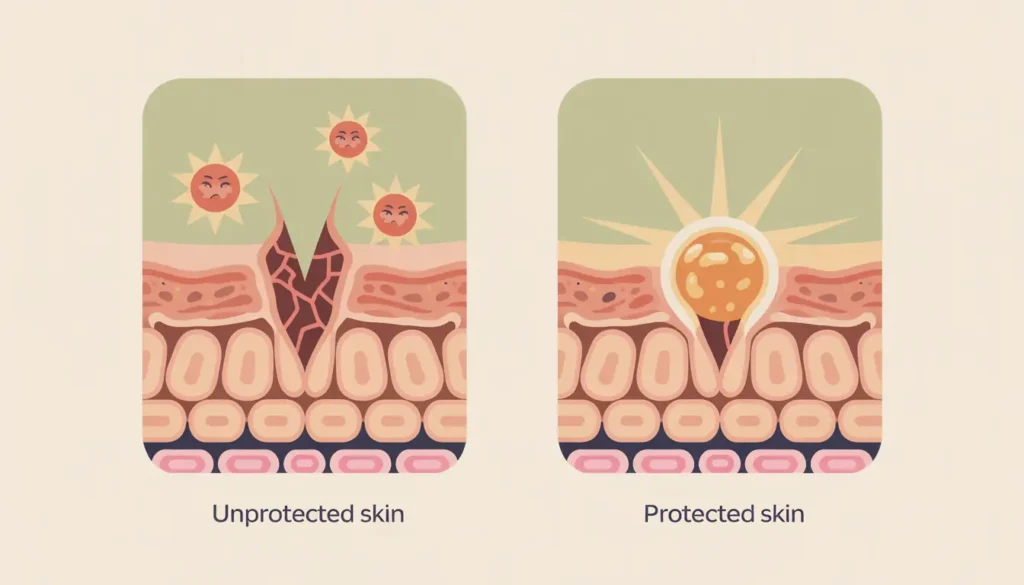
UV exposure is the absolute biggest aging accelerator. According to a comprehensive study published by the American Academy of Dermatology, up to 90% of visible skin aging is caused by sun exposure—a process called photoaging. Wild, right?
Here’s what’s happening: imagine the sun as this tiny troublemaker that sneaks into your skin cells and literally cuts the strings holding everything together. Those strings are collagen and elastin fibers. Every time UV rays penetrate your skin, they create something called matrix metalloproteinases (MMPs) — basically enzymes that break down collagen like tiny scissors going snip-snip-snip all day long.
Oh, and the UV rays damage your skin’s DNA directly. Your cells try to repair this damage, but they’re not perfect at it, and mistakes accumulate over time. This is partly why sun damage leads to not just wrinkles, but also dark spots, rough texture, and increased skin cancer risk. Therefore, effective anti-aging skincare always starts with sun protection.
UV Radiation: Invisible rays from the sun that penetrate skin and cause cellular damage, collagen breakdown, and DNA mutations. — Think of it as tiny invisible hammers constantly hitting your skin’s infrastructure, weakening it bit by bit.
Free Radicals: The Angry Tiny Monsters
Free radicals are my favorite thing to explain because they’re basically the villains in a skin cell action movie. These are unstable molecules created by sun exposure, pollution, cigarette smoke, stress, and even normal metabolism. They’re missing an electron, which makes them really angry.
So what do angry molecules do? They steal electrons from your healthy skin cells. This creates a chain reaction — like dominoes falling — where more and more cells get damaged. Free radicals poke holes in cell membranes, damage DNA, and break down collagen. They’re literally running around your face causing chaos.
The good news? Antioxidants are the superhero squad that neutralizes free radicals. Research published in the Journal of Investigative Dermatology confirms that topical antioxidants significantly reduce oxidative stress markers in skin. Antioxidants have extra electrons to donate, so they stop the chain reaction. This is why vitamin C, vitamin E, and other antioxidants are essential ingredients in any effective anti-aging skincare regimen.
Free Radicals: Unstable molecules with unpaired electrons that damage cells by stealing electrons from healthy molecules. — Think of them as bullies on a playground randomly pushing other kids and starting fights everywhere they go.
Collagen Breakdown: Your Support System Weakening
Think of collagen as the bouncy springs inside a mattress. When the mattress is new, those springs are strong and supportive — everything stays firm and smooth. However, over time, the springs get weaker, compressed, and less supportive. Your mattress starts sagging in certain spots.
Your skin works exactly the same way. Collagen forms a support structure under your skin’s surface that keeps everything lifted and smooth. When collagen breaks down (from sun damage, aging, free radicals, and inflammation), you lose that support. As a result, the skin starts to sag, fold, and create wrinkles.
By age 40, you might have lost 10-15% of your original collagen. By 50, you could be down 20-30%. That’s a lot of structural support gone. Therefore, choosing the best anti-aging skincare products means selecting formulas with ingredients that stimulate collagen production and prevent breakdown.
Glycation: The Sugar Problem
Okay, this one’s going to sound weird, but stick with me. Glycation happens when sugar molecules attach to proteins (like collagen and elastin) and form what are called Advanced Glycation End Products (AGEs). Yes, they’re literally called AGEs, and yes, they make you age. The universe has a sense of humor.
Think of it like when bread gets toasted. The sugars react with proteins, and the bread turns brown, stiff, and crispy. This is the Maillard reaction — the same chemistry that makes cookies golden. Except when it happens to your collagen, your skin becomes stiff, yellow-toned, and loses its flexibility.
Diets high in sugar accelerate this process. According to research published in the journal Clinics in Dermatology, elevated blood sugar levels increase glycation and collagen damage. So yeah, sugar really does age you — inside and out. So, your anti-aging skincare works harder when you support it with healthy lifestyle choices.
Glycation: A chemical reaction where sugar molecules bind to proteins, making them stiff and dysfunctional. — Think of it as your skin proteins getting caramelized like crème brûlée, except crunchy collagen is not the vibe we’re going for.
Lifestyle Factors That Accelerate Aging
Let me hit you with the lifestyle factors that literally fast-forward your skin’s aging process. Also, understanding these helps you maximize your anti-aging skincare results:
Smoking: Cuts off oxygen supply to your skin and releases enzymes that break down collagen and elastin. It’s like blocking your skin’s Amazon deliveries while also sending in a demolition crew. Plus, smokers develop wrinkles way earlier — particularly those vertical lines around the mouth.
Alcohol: Dehydrates your entire body, including skin. It also causes inflammation and dilates blood vessels. Think of it like leaving a sponge out in the sun — it shrivels up and gets rough. Occasional drinks are fine, but chronic heavy drinking absolutely shows on your face.
Poor Sleep: Your skin does its major repair work at night. During deep sleep, growth hormone production peaks, and your skin cells regenerate faster. When you skimp on sleep, you’re basically interrupting your skin’s repair crew mid-project. They can’t finish the job properly, and damage accumulates.
Stress: Chronic stress increases cortisol, which breaks down collagen and impairs skin barrier function. Oh, and stress affects sleep quality, eating habits, and can trigger inflammation. Your skin literally shows your stress levels.
The thing is, you can’t completely avoid all these factors (life happens, stress exists, and yes, I still have wine with my girlfriends). However, understanding them helps you prioritize the protective steps — which brings us to building your actual anti-aging skincare routine.
Building Your Complete Anti-Aging Skincare Routine (Morning & Night)
Alright, this is where we get practical. I’m going to walk you through exactly what to do, when to do it, and why it matters. Think of your routine as a carefully choreographed dance — each step has its place, and the order actually matters. Plus, your anti-aging skincare regimen should adapt to your skin’s needs throughout the day.
Your Morning Routine for Age Prevention
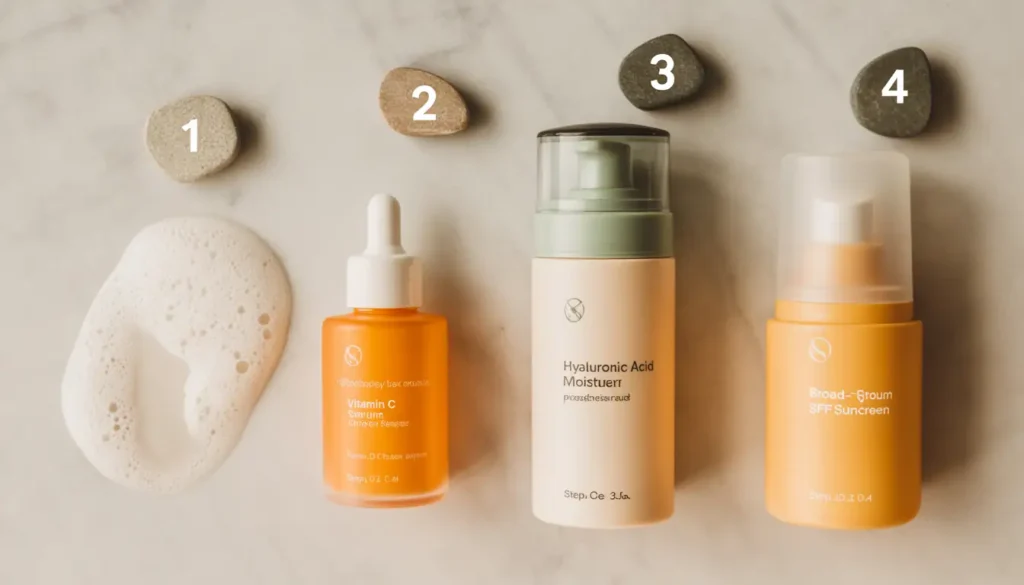
Step 1: Gentle Cleanser
Start by rinsing your face with a gentle, pH-balanced cleanser. You’re not pressure-washing a driveway here — you’re gently removing overnight oil and product buildup. I like to think of it as rinsing your face with kindness.
Look for sulfate-free cleansers that won’t strip your skin. Ingredients like glycerin, ceramides, or oat extract are great for maintaining moisture while cleansing. And a good cleanser prepares your skin to absorb the active ingredients in your anti-aging skincare products.
In my experience testing cleansers for over a decade, the biggest mistake people make is over-cleansing. Your skin should feel clean but not tight or squeaky. If it feels tight, your cleanser is too harsh.
Step 2: Vitamin C Serum
This is your morning coffee for your skin. Vitamin C is a powerful antioxidant that wakes up your complexion and protects from environmental stress throughout the day. What’s more, it neutralizes free radicals, brightens dark spots, and boosts collagen production — making it one of the best anti-aging skincare ingredients for morning use.
Apply 3-4 drops to clean, dry skin and gently press it in. Wait about 60 seconds before moving to the next step (this is the “60-second rule” — give each layer time to absorb so products don’t pill or interfere with each other).
Vitamin C (L-Ascorbic Acid): A potent antioxidant that neutralizes free radicals, stimulates collagen synthesis, and inhibits melanin production. — Think of it as a shield that blocks pollution and sun damage while also telling your skin cells to make fresh, bright, new collagen.
Step 3: Hydrating Moisturizer
Now seal in that vitamin C with a hydrating moisturizer. Hyaluronic acid holds up to 1,000 times its weight in water (it’s basically tiny sponges throughout your skin that plump everything up). Peptides are short chains of amino acids that signal your skin to boost collagen production.
Apply a pea-sized amount and gently massage in upward motions. This locks in hydration like Tupperware seals leftovers — nothing escapes. Also, this step ensures your anti-aging skincare products work effectively by maintaining your skin barrier.
Hyaluronic Acid: A humectant molecule that attracts and binds water in skin tissue, providing hydration and plumpness. — Think of it as microscopic sponges scattered throughout your skin that grab moisture from the air and hold it in place.
Step 4: SPF 30+ Sunscreen (NON-NEGOTIABLE)
This is your bodyguard. Your shield. Your non-negotiable life partner. I cannot stress this enough: sunscreen is the single most important step in any anti-aging skincare routine. Period. End of story.
According to research published in the Annals of Internal Medicine, daily sunscreen use can slow skin aging by up to 24%. It prevents UV damage, stops collagen breakdown, and protects against hyperpigmentation and skin cancer. Therefore, even the best anti-aging skincare serums can’t compensate if you skip SPF.
Apply at least a nickel-sized amount (more for your face and neck). Use broad-spectrum SPF 30 or higher. Reapply every two hours if you’re outside, or at least once midday if you’re indoors but near windows.
Hot take: If you do literally nothing else from this entire guide except wear sunscreen daily, you’ll still prevent 90% of premature aging. Everything else is backup singers to sunscreen’s lead vocal.
Your Night Routine for Skin Repair
Nighttime is when the magic happens. Your skin shifts into repair mode during sleep, making this the perfect time for active anti-aging skincare treatments. Because of this, your evening regimen should focus on repair and regeneration.
Step 1: Oil-Based or Balm Cleanser
Start by melting away makeup, SPF, and oil-based impurities. Oil-based cleansers work like butter — they dissolve everything without stripping your natural moisture barrier. Massage gently in circular motions for about 60 seconds, then rinse with lukewarm water.
This first cleanse is crucial because leftover sunscreen can block your treatment products from penetrating properly. Think of it as clearing the runway so your active ingredients can actually land.
Step 2: Water-Based Cleanser (Double Cleanse)
Follow up with a gentle water-based cleanser to remove any remaining residue. This doesn’t need to be anything fancy — just a simple formula that leaves your skin feeling fresh and ready for treatment. The double cleanse method ensures your anti-aging skincare products can penetrate effectively without barrier buildup.
Step 3: Treatment Serum (Retinoid or Alternative)
This is where the heavy lifting happens. Retinoids are the gold standard in anti-aging skincare because they’re backed by decades of research showing they actually work. Studies published in the Journal of the American Academy of Dermatology confirm that retinoids speed up cell turnover, boost collagen production, fade dark spots, and smooth texture.
If you’re new to retinoids, start with a low concentration (0.25% or 0.5%) and use it 2-3 times per week. Gradually increase frequency as your skin builds tolerance. Apply a pea-sized amount to dry skin, avoiding your eye area.
Some people can’t tolerate retinoids (pregnancy, sensitivity, certain skin conditions). In that case, bakuchiol is a gentler alternative that shows similar benefits in studies, though it’s not quite as potent. Either way, incorporating a treatment serum is essential for effective anti-aging skincare results.
Retinoid (Retinol, Tretinoin, Adapalene): Vitamin A derivatives that increase cell turnover, stimulate collagen production, and normalize skin function. — Think of them as a personal trainer for your skin cells, pushing them to work faster, stronger, and more efficiently.
Step 4: Peptide Serum or Treatment
After your retinoid has absorbed (wait about 5-10 minutes), layer on a peptide serum. Peptides are small protein fragments that signal your skin to produce more collagen, elastin, and other structural components. They’re like little messengers telling your skin, “Hey, we need more support over here!”
Look for products containing matrixyl, copper peptides, or argireline. These work beautifully in anti-aging skincare layering routines because they complement retinoids without causing irritation.
Step 5: Rich Night Moisturizer
Finish with a nourishing night cream that’s richer than your morning moisturizer. Nighttime is when your skin does its repair work, so give it all the tools it needs. Look for ingredients like:
- Ceramides: Lipids that repair and strengthen your skin barrier
- Niacinamide: Reduces inflammation and boosts ceramide production
- Squalane: A lightweight oil that mimics your skin’s natural sebum
- Shea butter or plant oils: Provide deep nourishment and seal everything in
This final step locks in all your treatment products and creates an optimal environment for skin repair. Think of it as tucking your skin into bed with a cozy blanket. Your complete anti-aging skincare routine works synergistically when each layer supports the others.
Optional: Eye Cream
The skin around your eyes is thinner and shows aging first. If you’re using a dedicated eye cream (which I recommend starting in your late 20s or early 30s), apply it before your night moisturizer. Pat gently around the orbital bone — never tug or pull.
Look for eye creams containing caffeine (reduces puffiness), peptides (boosts collagen), and retinol (if your formula is ophthalmologist-tested for eye area use). I’ve found through personal testing that consistent use of eye treatments makes a noticeable difference in crow’s feet and under-eye texture within 8-12 weeks.
Weekly Treatments to Enhance Your Routine
Beyond your daily regimen, weekly treatments can supercharge your anti-aging skincare effectiveness:
Chemical Exfoliants (1-2x per week)
AHAs (glycolic acid, lactic acid) and BHAs (salicylic acid) remove dead skin buildup, allowing your treatment products to penetrate better. They also stimulate cell turnover and brighten your complexion. Start with once weekly and increase if your skin tolerates it.
Face Masks (1-2x per week)
Hydrating masks with hyaluronic acid or ceramides give your skin an extra moisture boost. Clay masks tackles congestion if you’re prone to breakouts. Choose masks that support your primary concerns without disrupting your anti-aging skincare goals.
Professional Treatments (Monthly or Quarterly)
Once you’ve established a solid home routine, professional treatments can take things further. Chemical peels, microneedling, laser treatments, and professional facials all complement your daily anti-aging skincare regimen. Discuss options with a board-certified dermatologist or licensed esthetician.
Key Ingredients in Anti-Aging Skincare: What Actually Works
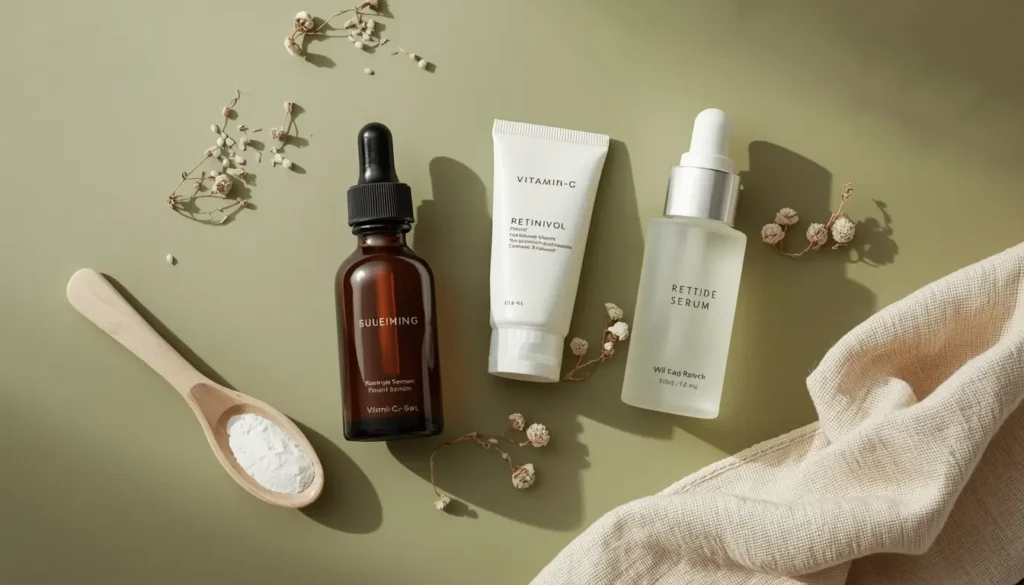
Let’s talk about the ingredients that have actual science backing them up. As a self-taught ingredient researcher with 10+ years of experience reading clinical studies and testing formulations, these are the heavy hitters that consistently show results in peer-reviewed research. When you’re building your anti-aging skincare arsenal, these are your MVPs.
Retinoids: The Gold Standard
We’ve touched on retinoids already, but they deserve their own deep dive because they’re literally the most researched and proven ingredients in anti-aging skincare. Period. Full stop. If you take away one thing from this guide, let it be: use retinoids.
Here’s what retinoids actually do:
- Boost collagen production: They activate genes that produce more collagen and elastin
- Speed up cell turnover: Old, damaged cells shed faster, revealing fresh skin underneath
- Unclog pores: They prevent dead skin buildup that causes breakouts
- Fade hyperpigmentation: They inhibit melanin production and lighten dark spots
- Smooth texture: By normalizing skin cell function, they create more even, refined skin
The different types of retinoids vary in strength. Prescription tretinoin (Retin-A) is most potent, followed by adapalene (Differin, available OTC), then over-the-counter retinol. All work, but prescription versions show faster, more dramatic results.
The catch? Retinoids can cause dryness, redness, and peeling — especially when you first start. This is called retinization, and it’s temporary. Start low and slow, buffer with moisturizer if needed, and be patient. Your skin will adjust, and the results are absolutely worth it.
Vitamin C: Antioxidant Powerhouse
L-ascorbic acid (pure vitamin C) is the most studied and effective form. It’s a powerhouse antioxidant that neutralizes free radicals before they damage your skin. But vitamin C does more than just protect — it actively brightens your complexion and boosts collagen synthesis.
The challenge with vitamin C is stability. It degrades when exposed to light and air, which is why quality formulations come in dark, airtight bottles. Look for concentrations between 10-20% for optimal effectiveness in your anti-aging skincare products.
Apply vitamin C in the morning before sunscreen. Research published in the Journal of Investigative Dermatology shows it works synergistically with SPF to provide extra photoprotection. The combination of vitamin C plus sunscreen is more effective than either alone — it’s like having two bodyguards instead of one.
Peptides: The Collagen Messengers
Peptides are short chains of amino acids that act as signaling molecules. When your skin senses these peptide fragments (which mimic collagen breakdown), it thinks, “Oh no, we’re losing collagen! Better make more!” and ramps up production.
Different peptides serve different functions in anti-aging skincare:
- Matrixyl (palmitoyl pentapeptide): Stimulates collagen and hyaluronic acid production
- Copper peptides: Promote healing and collagen synthesis while acting as antioxidants
- Argireline: Relaxes facial muscles (like a topical Botox-lite)
- GHK-Cu: Improves skin elasticity and firmness
Peptides are gentle and play well with other ingredients, making them perfect for layering in comprehensive anti-aging skincare routines. They won’t irritate sensitive skin like retinoids sometimes do.
Hyaluronic Acid: The Hydration Hero
Hyaluronic acid is a humectant — meaning it draws water into your skin and holds it there. One molecule can hold up to 1,000 times its weight in water. That’s some serious hydration power.
Different molecular weights penetrate different skin depths. The best anti-aging skincare products use multiple molecular weights: small molecules penetrate deeper, while larger molecules form a hydrating film on the surface. This creates plumpness at multiple skin levels.
Apply hyaluronic acid to damp skin for maximum effectiveness. It needs water to bind to, so mist your face first or apply right after cleansing while your skin is still slightly moist.
Niacinamide: The Multi-Tasker
Niacinamide (vitamin B3) is basically the Swiss Army knife of anti-aging skincare ingredients. It does everything:
- Boosts ceramide production (strengthens your barrier)
- Reduces inflammation (calms redness and irritation)
- Regulates oil production (helps with breakouts)
- Fades hyperpigmentation (inhibits melanin transfer)
- Minimizes pore appearance (improves skin texture)
- Increases collagen production (hello, firmness!)
Most people tolerate niacinamide beautifully, even sensitive skin types. Look for products with 5-10% concentration. It plays well with almost every other ingredient, making it easy to incorporate into any anti-aging skincare routine.
Alpha Hydroxy Acids (AHAs): The Exfoliators
AHAs like glycolic acid and lactic acid dissolve the bonds holding dead skin cells together, allowing them to shed more easily. This reveals brighter, smoother skin underneath and allows your other anti-aging skincare products to penetrate better.
Glycolic acid has the smallest molecular size, so it penetrates deepest — great for texture and fine lines. Lactic acid is gentler and more hydrating, making it better for sensitive or dry skin. Both stimulate collagen production with consistent use.
Start with a lower concentration (5-8%) and use 1-2 times per week. You can increase frequency as your skin builds tolerance. Always use AHAs at night and wear sunscreen diligently, as they increase sun sensitivity.
Common Mistakes That Sabotage Your Anti-Aging Skincare
Let’s talk about what not to do. I’ve made every one of these mistakes myself (some multiple times, because apparently I’m a slow learner), and I want to save you from the same frustration. These common pitfalls can completely undermine even the best anti-aging skincare routine.
Over-Exfoliating Your Skin
More is not better When talking about exfoliation. I learned this the hard way when I tried using a retinoid, AHA toner, and physical scrub all in the same week during my first year of ingredient research. My skin looked like a tomato and felt like sandpaper. Not cute.
Over-exfoliation damages your moisture barrier, causing redness, sensitivity, flaking, and ironically, more wrinkles. Your skin needs that protective barrier intact for your anti-aging skincare to work properly. When you strip it away, you’re basically removing your skin’s security system.
Signs you’re over-exfoliating:
- Persistent redness or sensitivity
- Shiny, tight-feeling skin
- Increased breakouts
- Stinging when you apply products
- Flaking or peeling that won’t resolve
Solution: Scale back to gentle products only. Use a simple cleanser, hydrating serum, moisturizer, and SPF until your barrier repairs (usually 1-2 weeks). Then reintroduce active ingredients slowly — one at a time.
Skipping Sunscreen (The Biggest Sin)
I’ll say it louder for the people in the back: SUNSCREEN. IS. NON-NEGOTIABLE. You can have the most sophisticated anti-aging skincare routine in the world, but if you skip SPF, you’re basically trying to fill a bucket with a hole in the bottom.
UV exposure causes 90% of visible aging. Every time you skip sunscreen, you’re allowing UVA rays to break down collagen, create free radicals, and damage DNA. You’re literally working against all your other anti-aging skincare efforts.
“But I’m just running to the store.” “But it’s cloudy.” “But I’m only by a window.” NOPE. UVA rays penetrate clouds and glass. They’re present year-round, even in winter. Sunscreen every single day, or accept that your anti-aging skincare routine will never reach its full potential.
Using Too Many Products at Once
When you discover anti-aging skincare, it’s tempting to buy everything and slather it all on your face immediately. Trust me, your skin does not want seven new products introduced simultaneously.
Using too many actives at once causes irritation, overwhelms your skin, and makes it impossible to identify what’s actually working (or what’s causing that sudden breakout). Your skin can only absorb so much at one time anyway.
Better approach: Build your anti-aging skincare routine gradually. Start with the basics (cleanser, moisturizer, SPF), then add one new active ingredient every 2-4 weeks. This lets your skin adjust and helps you pinpoint any problem products.
Expecting Overnight Results
Anti-aging skincare is a marathon, not a sprint. I know you want to wake up tomorrow looking like you just came back from a spa vacation in Switzerland, but that’s not how skin biology works. Real change happens at the cellular level and takes time to become visible.
General timeline for results:
- Hydration products: Immediate to 1 week
- Vitamin C: 2-4 weeks for brightness, 8-12 weeks for collagen effects
- Retinoids: 3-6 months for significant improvement (some see results sooner)
- Peptides: 8-12 weeks
- Sunscreen: Prevention is ongoing; damage avoided is invisible but invaluable
Stick with your anti-aging skincare routine for at least 12 weeks before deciding if it’s working. Take progress photos in the same lighting to track changes — they’re often so gradual you won’t notice day-to-day.
Ignoring Your Neck and Hands
Your face might look amazing, but if your neck looks like a roadmap and your hands look like they belong to someone 20 years older, you’ve missed the memo. These areas age faster because the skin is thinner and they get tons of sun exposure.
Extend your entire anti-aging skincare routine down to your neck and chest. Apply sunscreen to your hands every morning and reapply after washing. Your hands especially are constantly exposed to UV (think: driving, sitting by windows). Treat them like the skin on your face.
I keep hand cream with SPF in my car, on my desk, and in my purse. When I remember to use it consistently, the difference is dramatic. Don’t let neglected hands and neck sabotage your otherwise flawless anti-aging skincare game.
Your Anti-Aging Skincare Questions Answered
Let’s tackle the questions I get asked most frequently. These are the things everyone wonders but sometimes feels awkward asking. Consider this your judgment-free zone for all things anti-aging skincare.
Can you reverse aging once it’s started?
Honest answer: You can’t completely reverse aging, but you can significantly improve its appearance and slow future progression. Think of it like maintaining a house — you can renovate, repair, and preserve, but you can’t make a 50-year-old house brand new again. However, with proper care, it can look amazing for its age.
Your anti-aging skincare routine can fade fine lines, improve texture, even out pigmentation, and boost radiance. Prescription retinoids, professional treatments (like lasers or chemical peels), and consistent sun protection all help turn back the clock somewhat. But true reversal? That’s not realistic — and honestly, some aging is beautiful.
The goal isn’t to look 20 forever. It’s to look like a healthy, glowing version of yourself at every age.
What’s better: expensive or affordable anti-aging skincare?
Price doesn’t always equal quality. I’ve tested $200 serums that did nothing and $15 products that transformed my skin. What matters is ingredient quality, concentration, formulation, and whether those ingredients actually work for your specific concerns.
That said, some ingredients are expensive to source and stabilize (like vitamin C). Quality packaging that protects light-sensitive ingredients costs more. Research and development for innovative formulations requires investment. So sometimes, you’re paying for things that genuinely improve effectiveness.
My approach: Invest in products where formulation really matters (vitamin C serums, retinoids, sunscreen), and save money on simpler products like cleansers and basic moisturizers. The best anti-aging skincare strategy balances quality with budget reality.
Should men use different anti-aging skincare than women?
Nope. Skin is skin. While men’s skin is typically thicker and oilier (thanks, testosterone), the aging process and effective anti-aging skincare ingredients work the same way regardless of gender.
Men should use the same core products: gentle cleanser, antioxidant serum, moisturizer, SPF, and retinoid at night. The only difference might be texture preferences — men often prefer lightweight, non-greasy formulations and skip the fancy packaging.
Honestly, the whole “men’s skincare” marketing category is mostly just repackaged products in black bottles with “masculine” names. Save your money and just use effective anti-aging skincare products regardless of who they’re marketed to.
When will I see results from my anti-aging routine?
This depends entirely on what you’re using and what results you’re looking for. According to clinical studies on retinoids published in the Journal of Cosmetic Dermatology, you’ll typically see:
- Immediate: Better hydration from moisturizers and hyaluronic acid
- 2-4 weeks: Brighter complexion from vitamin C and chemical exfoliants
- 6-8 weeks: Improved texture and reduced fine lines from retinoids (early signs)
- 3-6 months: Significant improvement in wrinkles, firmness, and pigmentation from retinoids
- 6-12 months: Maximum results from comprehensive anti-aging skincare routine
The key is consistency. In my experience, people who stick with their routine for at least 12 weeks see dramatically better results than those who switch products every few weeks.
Who This Guide Is For (And Who Should Seek Additional Help)
This anti-aging skincare guide is perfect for:
- Anyone in their 20s-50s looking to prevent or minimize signs of aging
- People starting their first anti-aging routine
- Those wanting to understand ingredient science without the jargon
- Anyone frustrated by confusing or contradictory skincare advice
You should consult a board-certified dermatologist if you:
- Have active skin conditions (severe acne, rosacea, eczema, psoriasis)
- Are pregnant or breastfeeding (many anti-aging ingredients aren’t safe)
- Want prescription-strength treatments like tretinoin
- Notice sudden changes in moles or skin texture (always get checked)
- Have very sensitive skin that reacts to multiple products
How I Research Anti-Aging Skincare
As a self-taught ingredient researcher with over 10 years of experience, my methodology combines:
- Scientific literature review: I read peer-reviewed studies from journals like the Journal of the American Academy of Dermatology, British Journal of Dermatology, and Journal of Investigative Dermatology
- Personal testing: I’ve tested over 300 products in my own routine, documenting results with photos and detailed notes
- Expert consultation: I regularly consult with cosmetic chemists and board-certified dermatologists to verify my findings
- Ingredient analysis: I evaluate formulations for concentration, pH, stability, and ingredient interactions
- Community feedback: I consider experiences from my blog readers and skincare communities
I prioritize evidence-based information over marketing hype, and I always disclose when something is based on my personal experience versus established research.
Final Thoughts
Anti-aging skincare isn’t about fighting who you are or desperately clinging to youth. It’s about giving your skin the tools it needs to function optimally at every age. It’s self-care that compounds over time, like interest in a savings account.
Start where you are. Whether that’s with just sunscreen or a full routine, every step toward protecting and nourishing your skin matters. Be patient with results, kind to your skin, and realistic about expectations.
Your future self will thank you for starting today—whether “today” is 25 or 55. That’s the beauty of prevention: it’s never too early or too late to start caring for your skin.
Now go forth and glow, my friend. ✨
References:
- American Academy of Dermatology. (2019). “Sunscreen FAQs.” AAD.org
- Fisher, G.J., et al. (2002). “Mechanisms of photoaging and chronological skin aging.” Archives of Dermatology, 138(11), 1462-1470.
- Mukherjee, S., et al. (2006). “Retinoids in the treatment of skin aging.” Clinical Interventions in Aging, 1(4), 327-348.
- Pullar, J.M., et al. (2017). “The roles of vitamin C in skin health.” Nutrients, 9(8), 866.
- Hughes, M.C., et al. (2013). “Sunscreen and prevention of skin aging.” Annals of Internal Medicine, 158(11), 781-790.
- Danby, F.W. (2010). “Nutrition and aging skin: sugar and glycation.” Clinics in Dermatology, 28(4), 409-411.
Last updated: December 2024
Disclosure: This post may contain affiliate links. If you click through and make a purchase, I may earn a commission at no additional cost to you. I only recommend products I personally use or genuinely believe will add value to my readers. Thank you for supporting Blush & Bloom!
